Author
Priya SaxenaChief Technology Officer Cloud AI Services
"*" indicates required fields
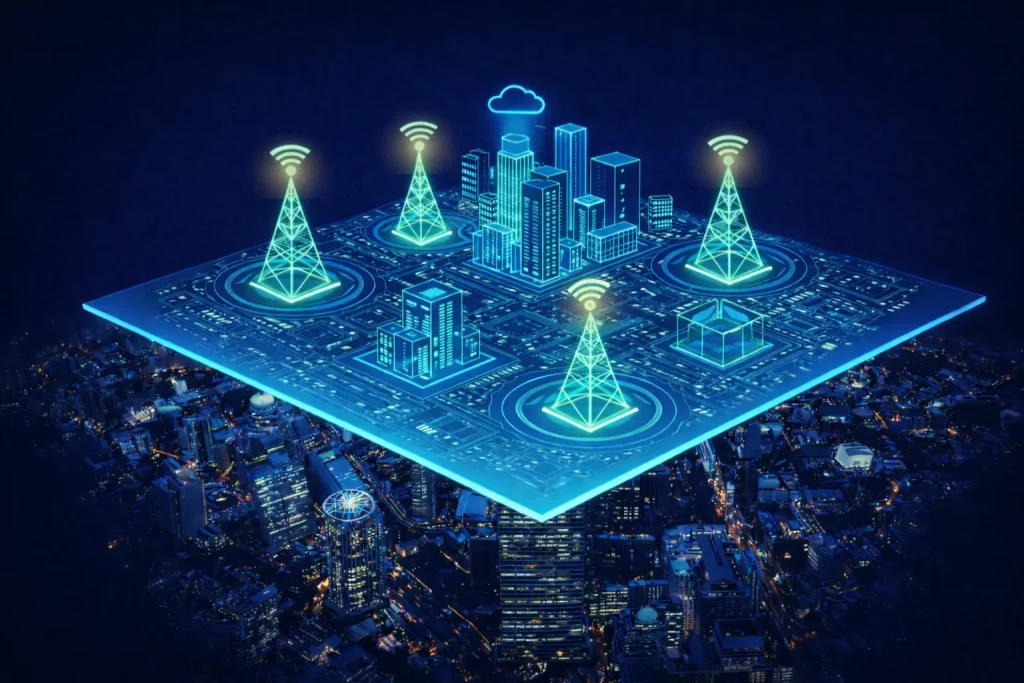
In the Telecommunications sector, the journey toward fully autonomous networks (Zero-Touch Network Operations) is often hindered by the complexity of modern infrastructure and siloed data sources. At Zinkworks, we believe the path to autonomy lies in the precise application of three distinct but complementary concepts: the Digital Model, the Digital Shadow, and the Digital Twin. By integrating these with Agentic AI, we are enabling operators to transition from passive-reactive observation to active-predictive, real-time control.
This blog outlines how Zinkworks utilises these digital representations to enhance operational efficiency and resilience for our clients to attain higher levels of network autonomy.
To navigate the path to autonomy, we must first distinguish between the terminologies often used interchangeably in the industry. As noted in recent research, there is a “growing eagerness to label everything as a digital twin,” yet distinct differences exist.
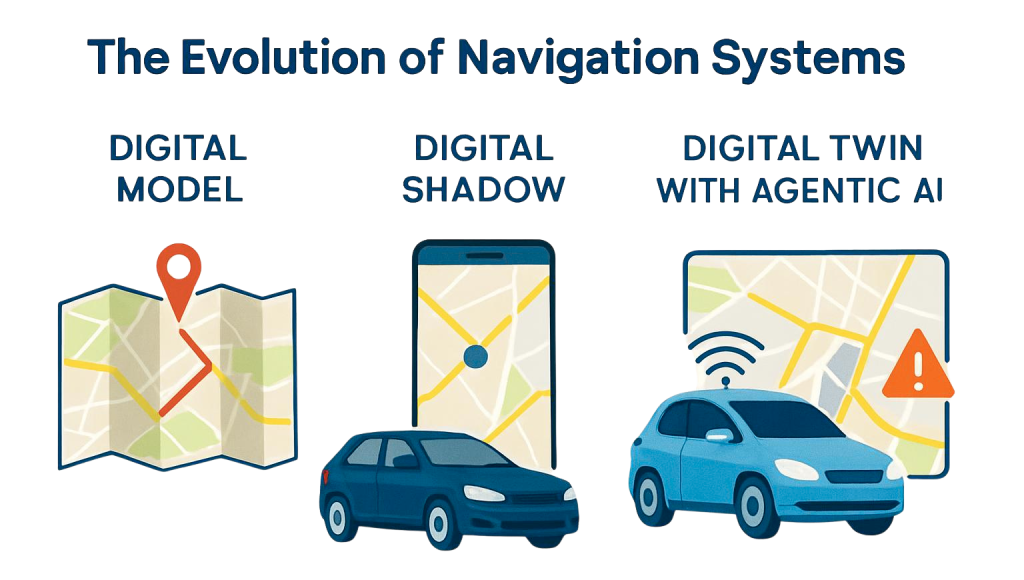 To visualise this Digital Continuum, Let us first consider the following analogy of the evolution of navigation systems [1] [2]:
This is a static representation of the network which can be used as a data model to simulate the physical network. It represents a “guess as to how a physical object, system, or process might operate in the future”. In the Telecommunications world, this can be a static snapshot of your network with the inventory systems combined with physical and logical topology of the network; which is most often represented by Graph data structures.
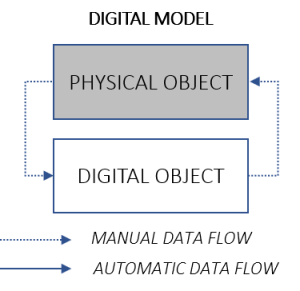
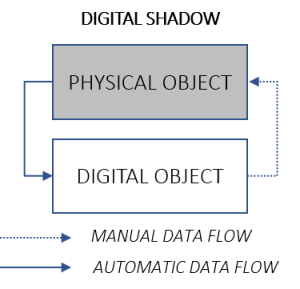
This is an evolving representation that mirrors the current state of the network. It relies on a one-way flow of data from physical assets to the digital platform. It is essential for monitoring and establishing a “sufficient level of detail” to understand asset performance. In the Telecommunications world, this can be an overlay of a network’s incidents, alarms, signals on top of the Digital Model to project the current state of the network in near real-time.
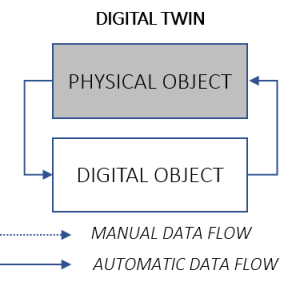
This represents the integration of virtual and physical realms through a two-way connection. Crucially, a digital twin can “change how the physical entity operates” based on analysis and simulation. The digital twin drives towards higher autonomy of the network using close loop automation, agentic workflow to not just detect but also fix the issues in real-time.
At Zinkworks, we do not view these concepts as a hierarchy, but rather as a toolkit where the solution depends on the “decisions needs” and the complexity of the system.
For Tier 1 providers, the design phase of 5G rollout, RAN application upgrades or network slicing can rely on Digital Models. Zinkworks utilises these models for “visualisation, analysis, and manipulation” of network elements in a risk-free environment. This simulation can be achieved in collaboration with the platform vendors. By running simulations, we allow operators to visualise changes to the network layout before physical implementation begins, aiding in design and optimisation. One aspect of this is the consolidation of data sources to form a single data lake. The data is then modeled into graphs and tabular datasets to project a digital view of the network topology. This topology when combined with the information from vendors on the network element configuration can be applied for simulation. Other features like simulation involve generation of historic data to replay and test the newer model before applying changes to the real network.
Network Operation centers require accurate, real-time visibility. Here, we deploy Digital Shadows. By aggregating various data sources from Fixed, Radio Access Networks (RAN) and Core systems, the Digital Shadow provides an up-to-date mirror of the network’s current state.
Similar to a manufacturing line monitoring bottlenecks, a Telecom Digital Shadow allows our clients to “monitor and analyse network KPIs” such as data throughput and latency to make data-driven decisions. If network data is lost or disrupted, the Digital Shadow can be used to “restore the most recent operational state,” minimizing downtime for subscribers.
The transition to true autonomy requires closing the loop. This is where Zinkworks introduces Agentic AI based on trust and governance within the Digital Twin framework. The solution consists of mathematical algorithms to predict or detect issues and chain it with the Generative AI agents to analyze various data sources and project a true state of the network.
A Digital Twin differs from a shadow because it enables “live feedback loops”. In a complex Telecom environment, human operators cannot react fast enough to micro-fluctuations in network demand. Agentic AI acts as the brain of the Digital Twin, analysing the data and executing changes back to the physical network infrastructure.
The benefit derived from a Digital Twin is “directly proportional to the complexity of the system”. Telecom networks, with their high interaction between data types and sources from multiple vendors, are prime candidates for this technology. However, successful implementation requires interoperability.
Zinkworks focuses on data ingestion, model creation, designing and implementing these digital representations with adequate guardrails to ensure trust and governance using Agentic AI. This allows different domains, such as the RAN, Transport, and Core to “operate seamlessly,” facilitating holistic decision-making. By connecting these representations, we enable “multidisciplinary problem-solving,” ensuring that insights from one part of the network (e.g., a power outage in the physical infrastructure) are instantly understood by the virtual network functions.
We have designed and implemented these Digital representations at various Tier1 Telecom Operators including Virgin Media O2 [3], MasOrange [4] and Vodafone [5].
Virgin Media O2 [3] is working with Zinkworks to deploy AI-driven automation technology to minimise downtime across its mobile network. Building on proven results in fixed broadband, where automation significantly reduced repair times and the need for engineer visits, the initiative will now be deployed on the mobile network to pre-empt issues and maximise network uptime The collaboration supports more resilient and reliable mobile connectivity across the UK, improving performance during peak demand and delivering a more consistent customer experience.
The solution being developed by Zinkworks for MasORange [4] is aimed to deliver three transformative use cases:
Digital models, digital shadows, and digital twins each provide distinct levels of digital representation and integration with live network environments. Understanding their specific roles, use cases, and value propositions is essential for leveraging them effectively within telecom operations. When these representations are standardised and interconnected across OSS ecosystems, they can deliver significantly greater advantages, enabling smarter collaboration between systems, improving interoperability across heterogeneous networks, and generating shared, real-time insights that drive better decision-making, automation, and operational efficiency throughout the telecom lifecycle.
While not every network element requires a Digital Twin, critical systems where failure leads to cascading outages do. By leveraging the state of the art AI models, Zinkworks helps Telecom providers deploy the right level of digital representation for the right task. We work with operators to determine whether a digital model, digital shadow, or digital twin will deliver the quickest and most meaningful return for their specific operational needs. Our approach begins with your current capabilities and challenges—focusing on practical progress rather than theoretical end goals.
References :
[1] https://www.researchgate.net/publication/369830792_Digital_Model_Digital_Shadow_Digital_Twin
[2] https://en.wikipedia.org/wiki/Digital_twin_integration_level
[3] https://www.zinkworks.com/news/virgin-media-o2-extends-partnership-with-zinkworks-to-accelerate-automation-across-its-mobile-network-and-minimize-downtime/
[4] https://www.zinkworks.com/news/zinkworks-partners-with-masorange-on-network-agentic-ai-innovation/
[5] https://www.zinkworks.com/news/zinkworks-and-vodafone-partner-to-create-ai-platform/