Shannon Retail Park, Dublin Rd, Athlone, Co. Westmeath, N37 E2P6
info@zinkworks.com
Driving AI Powered Solutions: Zinkworks 4th Annual Hackathon Recap
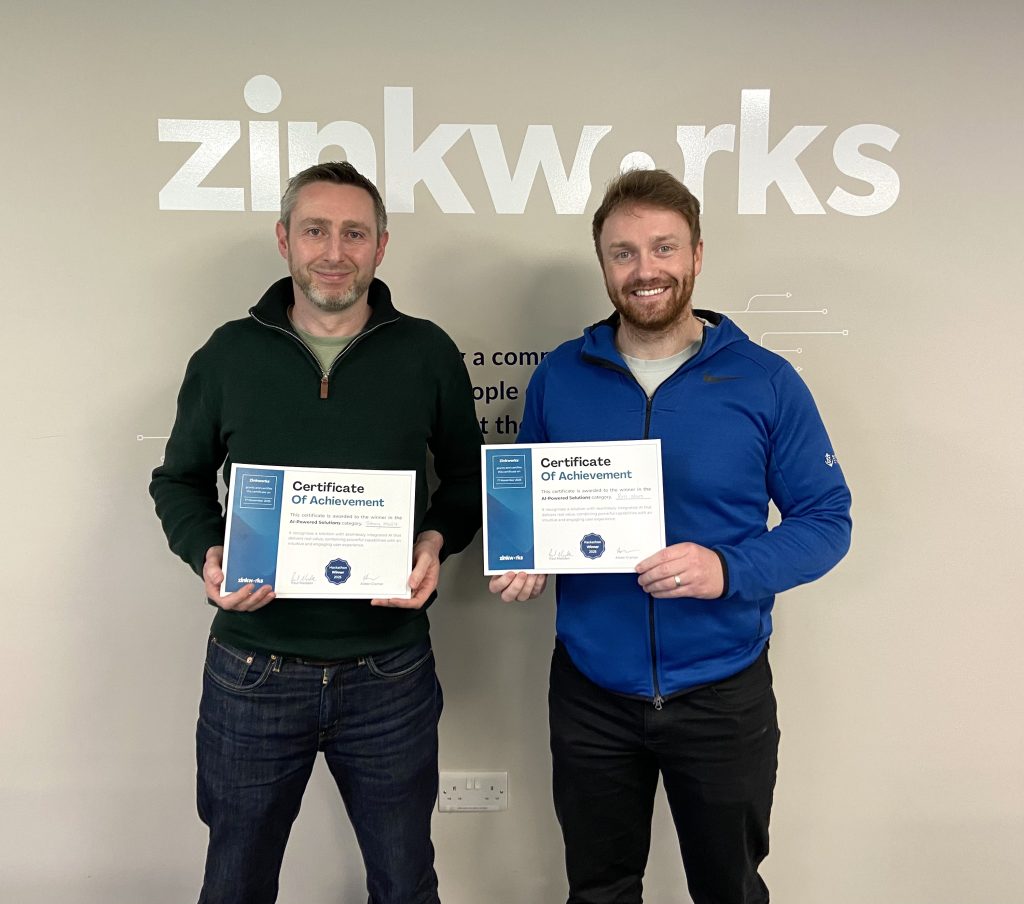
Innovation is at the heart of Zinkworks, and our annual Hackathon is a key event that brings this to life. Designed as an internal competition, the Hackathon encourages teams to experiment with emerging technologies like AI and automation, collaborate across disciplines, and create solutions with real-world impact. This year’s event focused on AI-driven applications, challenging participants to develop projects that demonstrate technical excellence and practical value. With team members representing more than 15 nationalities, the Hackathon reflects our commitment to diversity, creativity, and engineering innovation, while fostering knowledge sharing and continuous learning.
Hackathon Categories in 2025
To inspire diverse approaches and creativity, participants competed in two dynamic categories:
- Built by AI
Applications developed using AI tools, showcasing automation and creativity in software development. These projects highlight how AI can accelerate development and unlock new possibilities. - AI-Powered Solutions
Applications that integrate AI into telecom systems, combining human ingenuity with intelligent automation to solve complex problems. These solutions represent the future of telecom, where AI enhances decision-making and operational efficiency.
Celebrating the Winners
Nine innovative ideas were in the running, each showcasing unique approaches to AI integration and creative problem-solving.
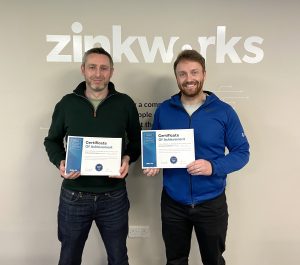
First Place – AI Powered Solutions | “AI Golf Tutor”
Johnny Mackle & Ross Moore
AI Golf Doctor is an intelligent coaching system that delivers personalised golf instructions using Gemini 2.5 Pro and Google’s Agent Development Kit (ADK). The application analyses swing data, learns from each user’s progress, and adapts its teaching style to create a customised coaching experience for golfers of all skill levels.
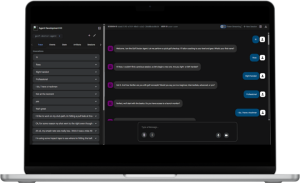
AI Golf Tutor
The system is built using Google ADK. The agent focuses on analysing the user’s setup and interpreting golf swing metrics (e.g. club path, face angle, launch data, consistency patterns), and then offers advice and drills to help the user perfect their golf swing. The agent adjusts the explanation style — offering beginner-friendly guidance or deeper technical insight based on the golfer’s experience level. It assists by showing images and videos to help with understanding. The agent has memory and provides dedicated user sessions which help track long-term progress, remember recurring issues and allow the coach to refine feedback over time.
The agent provides an intelligent coaching tool that can interpret raw swing data, provide real-time corrective advice, and continuously personalise feedback as the golfer improves. AI Golf Doctor bridges the gap between complex performance metrics and easy-to-understand coaching, making high-quality golf coaching more accessible than ever.
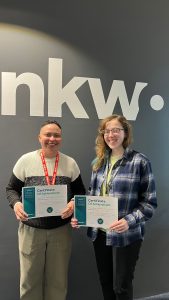
First Place – Built By AI | “MoodTunes”
Aine Kilbane & Eli Taveres
MoodTunes is an interactive journaling experience designed to connect emotions with music. Users begin by writing about their mood and situation in natural language. The system then analyzes the text to identify the core feeling or emotion and offers the option to generate a playlist of songs or albums tailored to that emotional state. This creates a personalized listening experience that reflects the user’s current mindset.
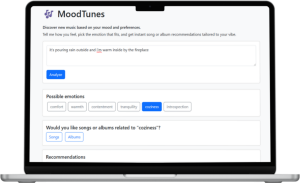
Mood Tunes
The application was built using OpenAI’s ChatGPT 5 to generate the initial boilerplate code and user interface, accelerating development and reducing manual coding effort. It runs on Spring Boot 3.5.6 and leverages Spring AI to interact with two specialized AI agents. The Emotion Analyser Agent is responsible for analysing the user’s initial prompt to create a short list of potential emotions, and the second Music Agent creates the playlists.
Beyond its core functionality, MoodTunes demonstrates how generative AI can transform product development by enabling rapid prototyping and feature expansion. Future iterations could include integration with streaming platforms, voice input for journaling, and adaptive recommendations based on listening history. This project is a stepping stone toward creating emotionally intelligent applications that enhance well-being and user engagement through AI-powered personalization
Runner Up – AI Powered Solutions | “BQ Analyzer”
Tristan Gutierrez & Misha Bordetas
BQ Analyzer is an intelligent application that automatically analyzes BigQuery table schemas and data to deliver actionable insights. Built using the Agent Development Kit (ADK), the system is structured around a host agent that orchestrates the workflow and delegates tasks to two sub-agents: one focused on schema analysis and another on data quality and patterns.
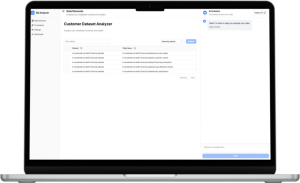
BQ Analyzer
A key innovation within BQ Analyzer is its custom agent registry, which enables the system to dynamically detect, load, and integrate newly available agents. This design makes the application highly extensible, allowing additional analysis agents to be introduced without modifying the core logic. As new agents become available, the host agent automatically incorporates them into its analysis pipeline, ensuring the system evolves continuously and remains adaptable to changing requirements.
The architecture provides a scalable, modular solution that monitors BigQuery datasets, applies multiple layers of analysis, and produces insights to improve data quality and optimize performance. Future enhancements could include real-time dashboards, predictive analytics for anomaly detection, and automated schema optimization. This project demonstrates how multi-agent systems can simplify complex data workflows and accelerate decision-making.
Runner Up – AI Powered Solutions | “Get the Control Back”
Orhan Idiriz
This project introduces an AI-driven system designed to simplify interaction with complex environments using natural language commands. The solution integrates multiple hardware components including an ultrasound sensor for real-time data input, servo motors, visual indicators, and sound alarms to create a responsive, interactive ecosystem.
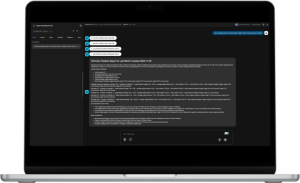
At its core, the system uses AI agents to manage and control parameters through speech or text, providing intuitive feedback to the operator. The proof of concept demonstrates a radar-like security system that scans a 180-degree arc and detects perimeter breaches. When triggered, it activates visual and audio alerts, including a siren and voice notifications that report the angle and distance of the intrusion.
The technical stack includes ESP32 microcontrollers running MicroPython, a Raspberry Pi 4B hosting RESTful APIs and MongoDB for historical data, and a Bluetooth audio system for alerts. The AI architecture combines Google’s Agent Development Kit (ADK) with custom in-house tools to orchestrate multiple agents, one for security control, another for multimedia, and a third for analyzing sensor data and presenting insights in a human-readable format.
This project showcases how AI can transform traditional control systems into intelligent assistants, reducing complexity and enabling seamless interaction with physical environments.
Why It Matters
The Hackathon isn’t just about building applications, it is about driving innovation and shaping the future of technology. Every idea presented moves us closer to smarter, more efficient systems and creative solutions that can make a real impact. It’s also an opportunity for our teams to learn, collaborate, and grow together, reinforcing the culture of innovation that defines Zinkworks.
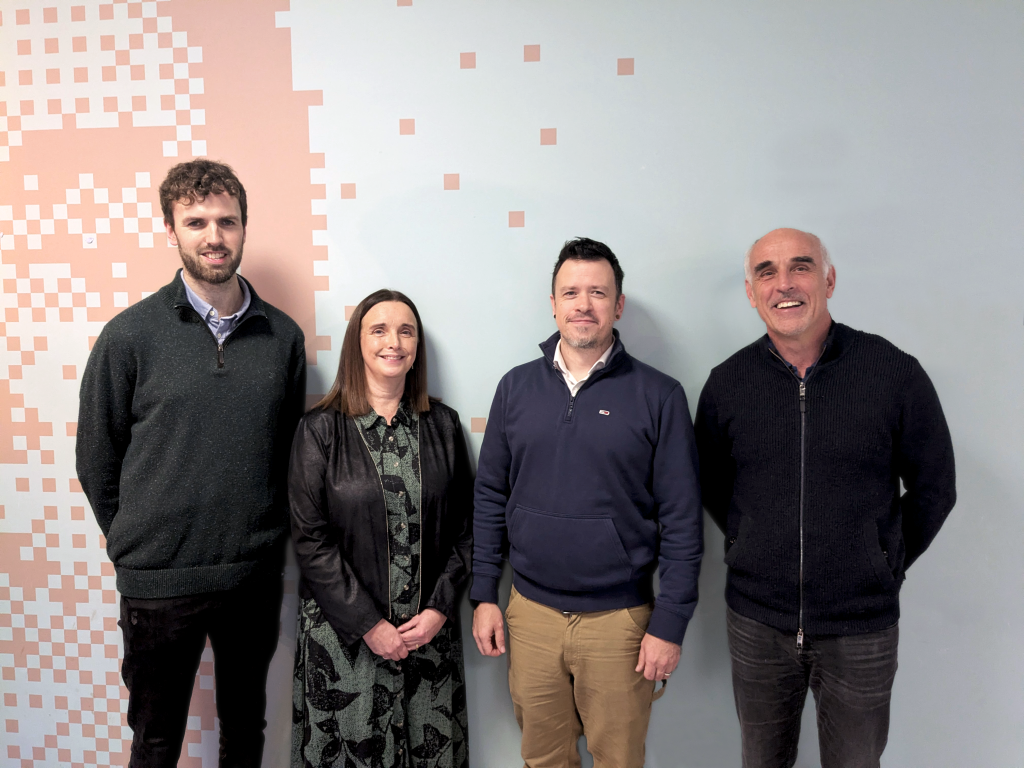
David Caulfield, Learning & Development Manager, Hackathon Organiser, said: “This year, we used the Hackathon as a reason to experiment with different AI tools and technologies. It’s great to see people trying out new things and building their ideas outside their day-to-day work. Well done to our winners and all our participants!”
A huge thank you to all participants, Aine Kilbane, Arjun Sinha, Eli Tavares, Francesco Davide Lapenta, Johnny Mackle, Misha Bordetas Beitia, Orhan Idiriz, Pawel Drabik, Rahul Pampati, Ross Moore, and Tristan Gutierrez for their creativity, dedication, and passion. Your work demonstrates what’s possible when technology and talent come together. Stay tuned for more breakthroughs from Zinkworks and follow us on LinkedIn for updates on how we continue to innovate and deliver cutting-edge solutions.
FAQs
01 What is the Zinkworks Hackathon?
The Zinkworks Hackathon is an internal innovation event where our global team collaborates to create cutting-edge solutions using AI and telecom technologies. It’s a platform for creativity, learning, and teamwork