Author
James McNamaraVP of Product
"*" indicates required fields
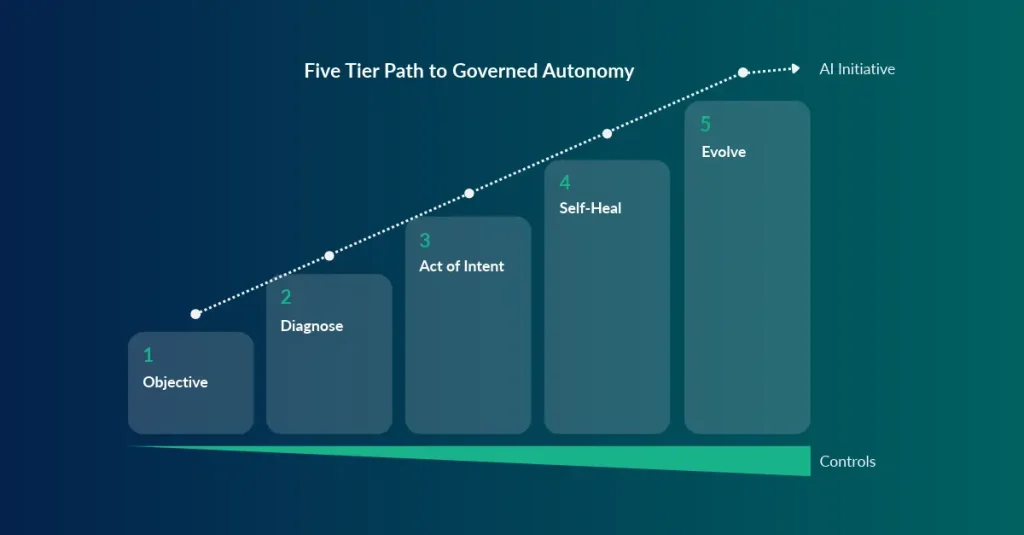
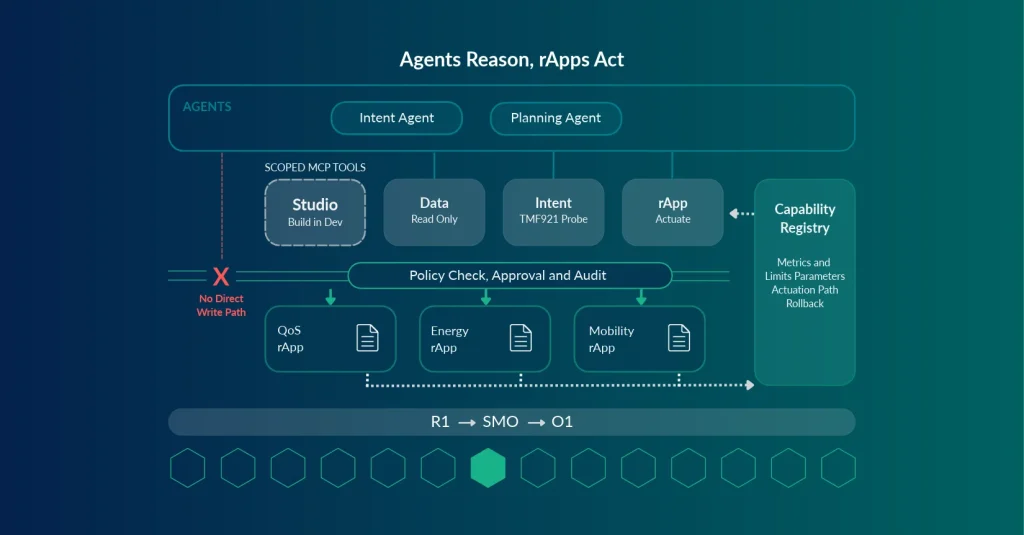
In our first blog, The Governance Gap Holding Operators Back from Level 4 Autonomy, we explained why the move beyond Level 3 is as much a governance challenge as a technical one, and why autonomy must be earned in stages. In the second, RAN Autonomy FAQ: The Five-Tier Path to Governed Autonomy, we set out what those stages look like in practice: five tiers of RAN use cases, each with a matching step up in controls. In the third, Agents Reason, rApps Act: 6 Principles for Governed AI in Open RAN, we explained the architecture behind the rule that no agent ever gets a write path of its own, through six principles for governed autonomy and five questions to ask any supplier who says their agents are ready to run your network. This final piece in the series turns that argument into a product you can see running.
At FYUZ 2026, we are launching rApp Studio Agent Edition, bringing governed, agentic AI to autonomous RAN operations, with three live closed loops on the stand to prove it.
The claim is simple. Telco operators with a radio access network can now run autonomous operations using the latest generation of agentic AI, and do it in a way that is governed, reliable and effective.
Today the argument becomes a product you can see running.
rApp Studio is what we offer today: a no-code, SMO-portable environment where operator engineers design, train, validate and package rApps in three to four days instead of three to six months. Ten times faster time to value per rApp, validated in Vodafone’s RAN innovation programme, built and validated on Ericsson EIAP and EIC, with standardised packaging that carries one design across many SMO targets.
rApp Studio Agent Edition is what comes next. An intent-led, fully autonomous agent running RAN operations: monitoring, root cause, change management, implementation, measurement, repeat. Agents reason over the RAN datalake and act only through rApps and the Studio, under the operator’s policy controls.
The certified O-RAN control path, R1 to the SMO to O1, is never touched.
Intent in, action out, with no parameter engineering. Faults fixed that nobody programmed for, cutting mean time to remediation. Business context from CRM, SLA and ticketing becomes a network signal. And the audit record becomes evidence for the board and the regulator.
Put simply: the fastest and safest way to optimise quality of service on your network.
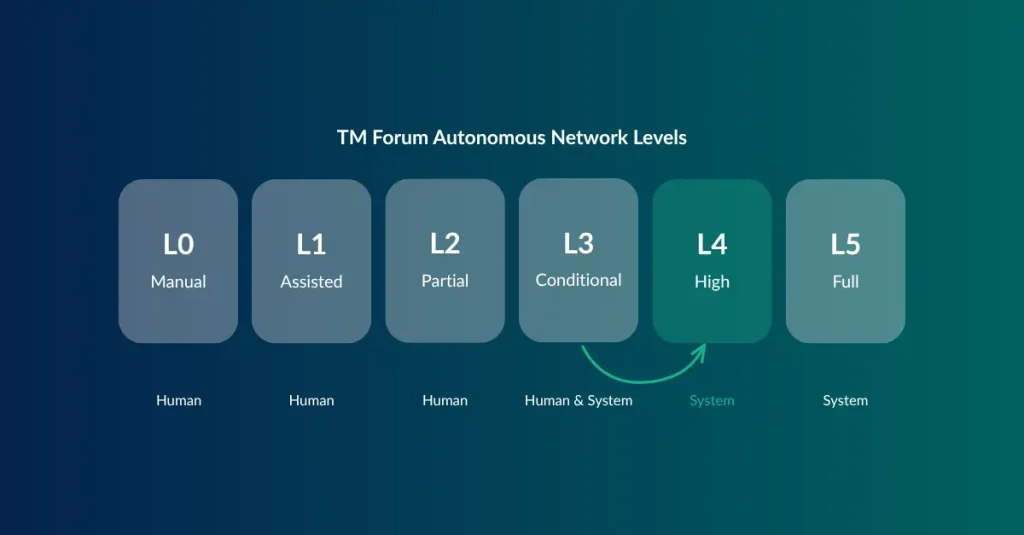
This work aligns with TIP’s own SMO Evolution and Agentic AI direction and with the TM Forum Autonomous Networks framework. The industry has articulated the need for governed autonomy and has set itself a deadline: agentic AI designed in during the 6G study phase, around mid to late 2027. rApp Studio Agent Edition is our answer to that ask, delivered now.
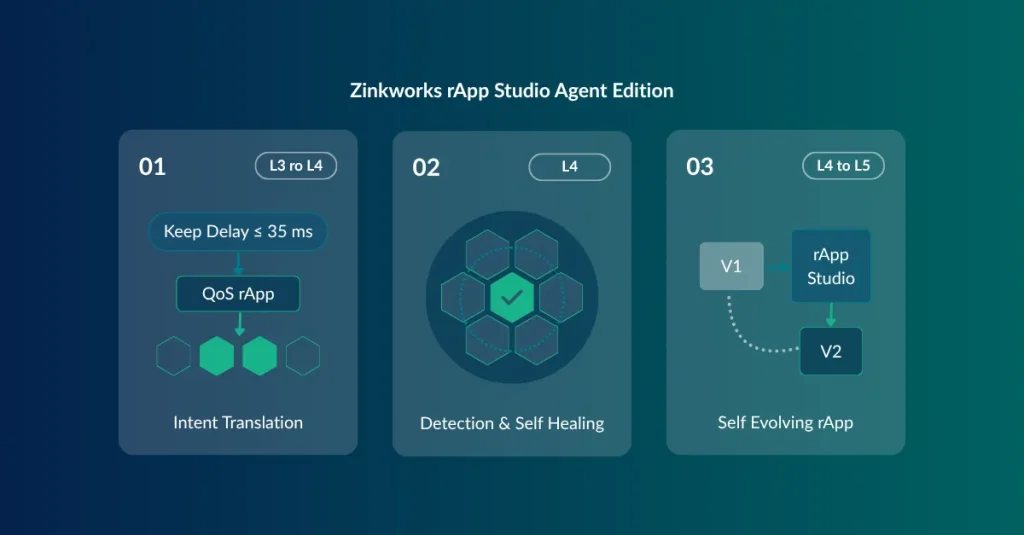
We said earlier in this series that trust is built by replay, not by assurance slides. So, at stand booth #14 we are running three live closed loops on one architecture, each with measurable proof points:
Meet us at FYUZ 2026, Seattle, 3 to 5 November, stand #14. Michael Behan and I will be on the stand all three days. Analysts and journalists can book a ten-minute demo with the engineers who built it; operators can book a working session on their own path from Level 3 to Level 5.

Zinkworks launched rApp Studio Agent Edition, its new flagship product, at FYUZ 2026 in Seattle. It enables telco operators with a radio access network (RAN) to run autonomous operations using the latest generation of agentic AI, in a way that is governed, reliable and effective. Operators state an objective in plain language, and AI agents handle monitoring, root cause analysis, change management, implementation and measurement in a continuous loop.